Source Fully Automatic Folding Travel Umbrella for Business, Travel, and Events
Explore 30 listings for a fully automatic folding travel umbrella suitable for daily commutes, business trips, and outdoor festivals. Buyers can compare features like fabric type, handle style, and customization options across multiple suppliers in China.
Key considerations
Products List


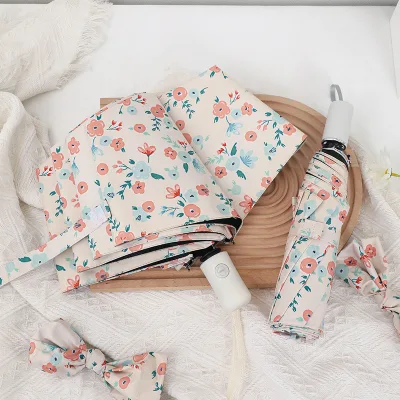
Comprehensive Sourcing Guide
Strategic Sourcing Guide for Fully Automatic Folding Travel Umbrellas
Navigating the global market for fully automatic folding travel umbrellas requires a disciplined approach that balances technical specifications with supply chain reliability. Buyers in the B2B sector must distinguish between general advertising umbrellas and specialized travel gear that demands robust engineering. The core keyword, "fully automatic folding travel umbrella," implies a specific mechanism for deployment and a compact form factor suitable for portability. Sourcing this category involves verifying that the automatic mechanism functions reliably under repeated use, ensuring the folding design does not compromise structural integrity, and confirming that the product meets the specific usage scenarios of the target market. This guide outlines the critical factors for evaluating suppliers and products, drawing strictly from observed market data and established procurement principles.
Technical Specifications and Mechanical Reliability
The defining characteristic of a fully automatic travel umbrella is its deployment mechanism. Unlike manual umbrellas that require physical force to open or close, these units utilize a spring-loaded system activated by a button or lever. When evaluating potential products, the primary technical observation is the "Control" attribute, which should explicitly state "Fully Automatic." This feature is essential for travel scenarios where users need rapid protection from sudden weather changes without fumbling with handles.
The structural composition is equally critical. The frame material determines the umbrella's resistance to wind and its overall durability. Market observations indicate a divergence in materials, with some units utilizing "Fiberglass" for its flexibility and wind resistance, while others employ "Iron" for cost efficiency. For a travel-specific product, the frame must balance weight and strength. Fiberglass ribs are generally preferred for high-performance travel umbrellas as they bend rather than break in strong gusts. The fabric is another key specification; while "Polyester" is a common material noted in the supply base, "Pongee" is also observed. Pongee often offers a smoother finish and better water repellency, which is vital for travel gear.
The physical dimensions of the folded unit dictate its portability. A "Short Umbrella Handle" is frequently associated with compact travel designs, whereas "Long Umbrella Handle" variants are typically straight or larger travel models. The open diameter is a crucial metric for coverage; observed specifications include models with an "Open Diameter" of 103.5cm and others listed at 21 inches. Buyers must align these dimensions with their target demographic's needs. A diameter of roughly 100cm is standard for adult protection, while smaller diameters may be suitable for single-person travel. The "Style" attribute further categorizes the product; while "Folding Umbrella" is the standard for travel, "Straight Umbrella" variants exist but are less portable. Ensuring the product matches the "Folding" style is non-negotiable for the travel category.
Compliance, Certification, and Safety Standards
In the B2B procurement of umbrellas, compliance with international standards is a primary risk mitigation strategy. While specific certification claims vary by supplier, the presence of recognized standards provides a baseline for quality assurance. Observed product data explicitly references "SGS" and "CE" as product standards. SGS is a global inspection, verification, testing, and certification company, and its mention suggests that the product has undergone third-party testing for quality and safety. CE marking indicates conformity with health, safety, and environmental protection standards for products sold within the European Economic Area.
Buyers should verify that the supplier can provide valid test reports corresponding to these standards. It is important to note that while some background knowledge suggests certifications like "BSCI" or "ROHS" might be relevant for ethical sourcing or material safety, these should not be assumed without explicit confirmation from the supplier. The procurement process must include a request for current certificates rather than relying on general market assumptions.
Additionally, the "prod_standard" field in product listings serves as a direct indicator of compliance intent. When a listing cites "SGS" or "CE," it implies a commitment to meeting specific regulatory thresholds. For travel umbrellas, safety is paramount; the automatic mechanism must not pose pinch hazards, and the materials must not contain harmful substances. Buyers should request documentation that confirms the materials, such as the "Polyester" or "Pongee" fabric and the frame materials, comply with relevant chemical safety regulations. The absence of specific certification data in a listing does not necessarily mean non-compliance, but it does require the buyer to initiate a verification process before placing an order.
Cost Drivers and Pricing Dynamics
Understanding the cost structure of fully automatic folding travel umbrellas is essential for budgeting and margin analysis. The observed price range in the market spans from 1 to 7.5 USD. This wide variance is driven by several factors, including the complexity of the automatic mechanism, the quality of materials, and the scale of production. Lower-priced units often utilize simpler mechanisms and standard materials like "Iron" frames, while higher-priced units may feature "Fiberglass" frames, superior "Pongee" fabric, and more robust automatic systems.
The Minimum Order Quantity (MOQ) is another significant cost driver. The observed MOQ range is extensive, spanning from 2 to 3000 units. This flexibility allows buyers to test the market with small batches or commit to large volumes for cost efficiency. For a buyer testing a new product line, an MOQ of 2 to 10 units might be feasible, allowing for sample evaluation. However, for established procurement, higher volumes often unlock better unit pricing. The "Customization" attribute is also a cost factor. While customization is "Available," adding logos, specific colors, or unique packaging can increase the unit cost and potentially affect the MOQ.
Lead times also influence the total cost of ownership. An observed lead time of "10 Days" suggests a relatively agile supply chain, which can be advantageous for just-in-time inventory strategies. However, buyers must verify if this lead time applies to standard stock items or customized orders. Customization often extends the lead time due to the need for mold creation or specific production scheduling. The "prod_packing" specifications, such as "1PC/Polybag" or "1PC/PE Bag, 10PCS/Carton," also impact logistics costs. Bulkier packaging increases shipping volume and freight charges, so optimizing packing density is a key consideration for cost reduction.
Typical Applications and Market Segmentation
Fully automatic folding travel umbrellas serve diverse applications, ranging from promotional giveaways to essential daily carry items. The "Type" attribute in the supply data includes "Advertising Umbrella," "Sun Umbrella," and general travel variants. This indicates that the same mechanical design can be adapted for different market segments. For "Advertising Umbrella" use cases, the focus is on branding space and durability for distribution. The "Feature" attribute often highlights "With Logo," "Eco-Friendly," and "Novelty," suggesting that these products are frequently used for corporate gifts or event promotions.
The "Occasion" attribute, such as "Festival," points to seasonal demand spikes. During rainy seasons or outdoor festivals, the demand for reliable, portable umbrellas increases. The "Usage" attribute listing "Decoration, Daily Use" further broadens the application scope. For daily use, the emphasis is on compactness and ease of operation, making the "Folding Umbrella" style with a "Short Umbrella Handle" ideal. For sun protection, the "Anti UV" attribute becomes critical. While some observed products are "Not Anti UV," others are explicitly "Anti UV." Buyers targeting the sun protection market must verify this specification, as it significantly impacts the product's value proposition.
The "Age Group" specification also guides market segmentation. Some products are designated for "Adults," while others are suitable for "Any Age." This distinction is vital for retailers targeting specific demographics. A travel umbrella designed for adults may have a larger canopy and a more robust handle, whereas a universal model might prioritize ease of use for children and seniors. Understanding these nuances ensures that the sourced product aligns with the intended customer base.
Supplier Evaluation and Quality Control
Selecting the right supplier is a critical step in the procurement process. The "prod_origin" data indicates that suppliers are primarily located in "Zhejiang, China" and "Yiwu, China." These regions are known for their manufacturing clusters and supply chain efficiency. However, location alone does not guarantee quality. Buyers must evaluate suppliers based on their ability to meet technical specifications and maintain consistency.
Quality control should begin with sample evaluation. The "Sample" attribute indicates that "Free" samples are often available, and "Design Making" is "Free of Charge" for certain models like sun umbrellas. This is an opportunity for buyers to physically test the automatic mechanism, check the fabric quality, and assess the build quality of the frame. Buyers should test the "Fully Automatic" control multiple times to ensure the spring mechanism does not fatigue or jam.
When evaluating suppliers, buyers should request detailed information on the "prod_model" and "Item" numbers to ensure traceability. Specific models like "RUM-0305-22" or "RG024-3" represent distinct product configurations. Consistency in these models across orders is essential for maintaining brand standards. Additionally, the "Craftwork" attribute, mentioning "Cotton Line, Adhibit," suggests attention to detail in assembly. Buyers should inspect the stitching and bonding quality to ensure the umbrella can withstand repeated use.
Verification of the "Standard" and "Certification" claims is also part of supplier evaluation. If a supplier claims "SGS" or "CE" compliance, the buyer should request the actual test reports. For "OEM Design," suppliers should demonstrate their capability to customize products while maintaining quality. The "OEM Design: Yes for Sun Umbrella" note indicates that customization is feasible for specific product lines, but buyers must confirm if this applies to the fully automatic folding models they intend to source.
Long-Term Procurement Considerations
Sourcing fully automatic folding travel umbrellas is not a one-time transaction but a long-term relationship management exercise. Buyers should consider the scalability of the supply chain. The wide MOQ range (2-3000) suggests that suppliers can accommodate growth, but buyers must ensure that the supplier can maintain quality as order volumes increase. The "Lead Time" of 10 days is a positive indicator, but buyers should negotiate terms that account for potential delays during peak seasons.
Sustainability is an emerging consideration in procurement. The "Feature" attribute includes "Eco-Friendly," which aligns with growing consumer demand for sustainable products. Buyers should inquire about the environmental impact of the materials used, such as the "Polyester" or "Pongee" fabric, and whether the production process adheres to eco-friendly practices. While specific certifications like "ROHS" are not universally confirmed in the data, the presence of "Eco-Friendly" as a feature suggests that suppliers are aware of these market trends.
Finally, buyers should plan for after-sales support and warranty. The "Customization" availability implies that suppliers are willing to work closely with buyers, but clear agreements on defect rates and replacement policies are necessary. The "prod_packing" specifications should be reviewed to ensure they meet the buyer's logistical requirements, minimizing damage during transit. By focusing on these long-term factors, buyers can build a resilient supply chain that delivers high-quality fully automatic folding travel umbrellas consistently.
FAQs
What frame materials are available for these umbrellas?
Available frame materials include fiberglass and iron. Fiberglass offers flexibility and wind resistance, while iron provides a cost-efficient alternative for standard models.
Can I customize the color and logo on these umbrellas?
Customization is available for colors and logos. Buyers can request specific colors like black or pure color options, and features like eco-friendly designs or novelty elements can be added.
What is the typical lead time for production?
The observed lead time is 10 days for standard orders. This duration may vary if customization is required, as specific production scheduling or mold creation could extend the timeline.
Which certifications are documented for these products?
Documented product standards include SGS and CE. These indicate third-party testing for quality and safety, though buyers should request specific test reports to verify compliance for their target markets.
How does the automatic control mechanism function?
The control is fully automatic, utilizing a spring-loaded system for deployment. This allows for rapid opening and closing without manual effort, making it suitable for travel and sudden weather changes.
What is the minimum order quantity for these items?
The minimum order quantity ranges from 2 to 3000 units depending on the supplier and model. Lower MOQs allow for market testing, while higher volumes often unlock better unit pricing.
Where are the manufacturers located?
Manufacturers are primarily located in Zhejiang and Yiwu, China. These regions are known for manufacturing clusters and supply chain efficiency, offering a variety of sourcing options for buyers.